Case Study · End-to-End Product Design
Pee Dee
Pet Care
Mobile-first local pet care directory — a shipped product serving the Pee Dee region
A free local directory helping pet owners in the Pee Dee region discover groomers, trainers, sitters, boarding, and veterinary care — all in one mobile-friendly experience.
Role
UX Designer / Product Designer
Responsibilities
Research · IA · Responsive UX · User Testing · Iteration
Product
Free local directory · 69 providers
Result
Live at peedeepetcare.com · $0 cost to providers
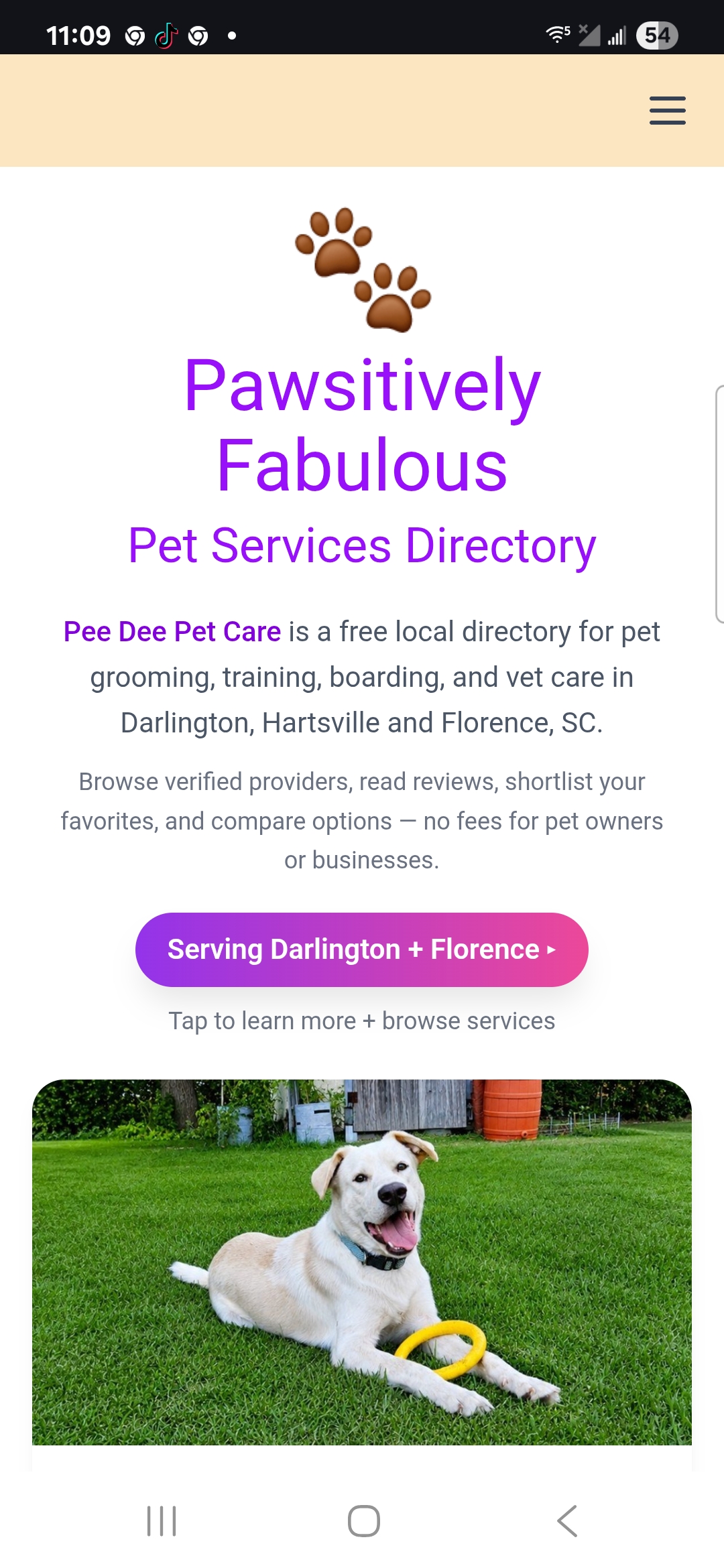
Homepage Mobile Screenshot
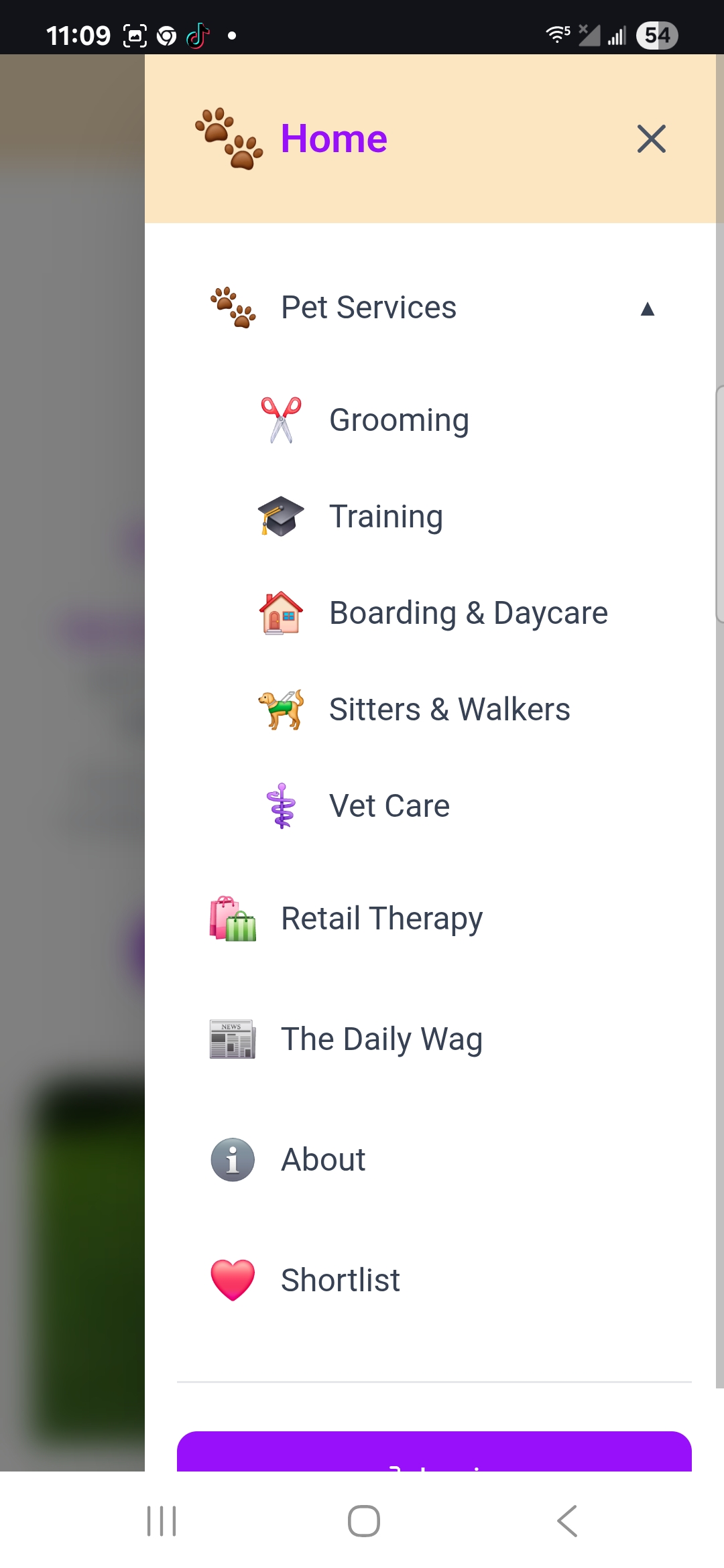
Mobile Navigation
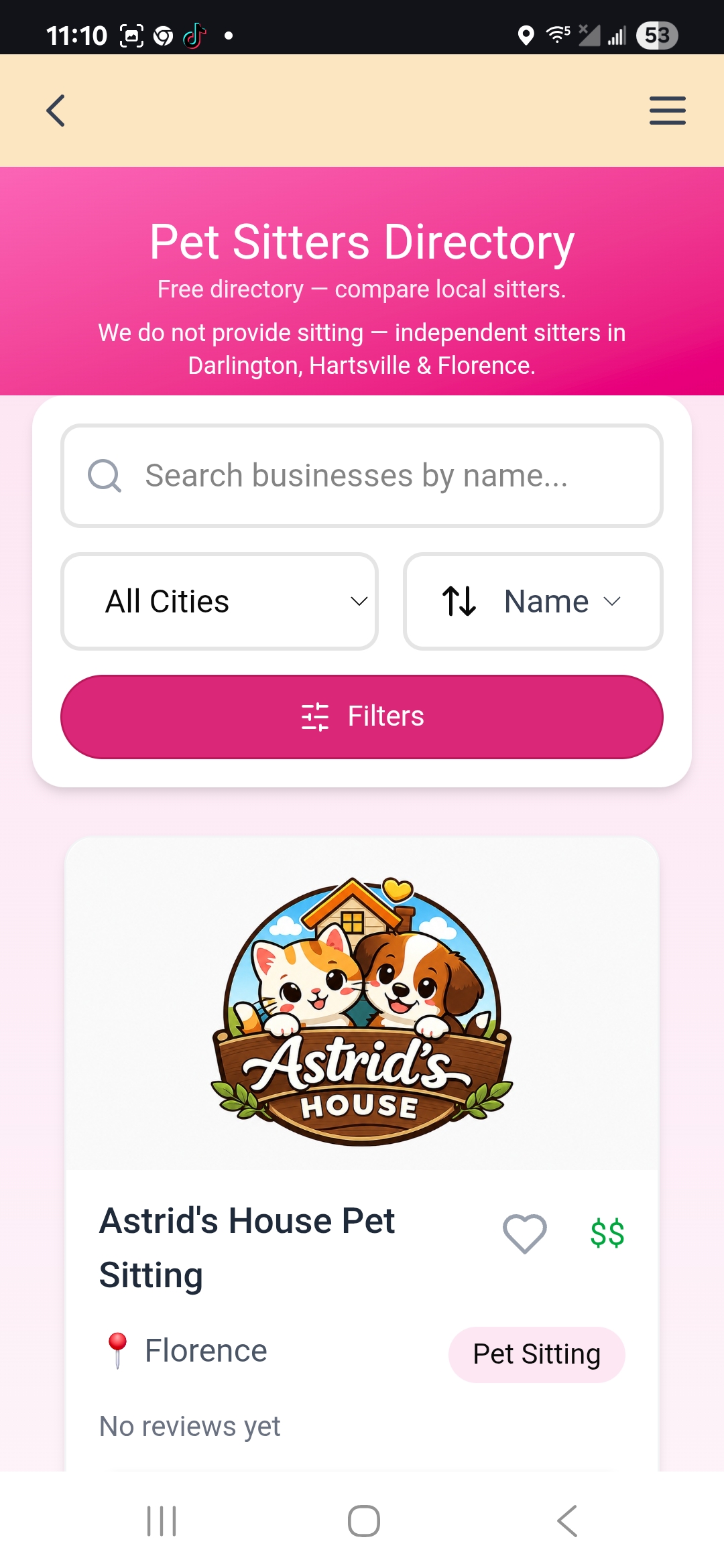
Search and Results
The Problem
Finding local pet care shouldn't require ten browser tabs.
The idea for Pee Dee Pet Care came from a simple problem: local pet-care information existed, but it was scattered.
Finding a veterinarian, groomer, trainer, boarding facility, sitter, or dog walker could mean searching Google, opening individual business websites, checking Facebook pages, comparing incomplete listings, and trying to determine which information was still current.
The problem wasn't a lack of information.
The problem was fragmentation.
Need Pet Care
Business website
Reviews
Phone calls
Compare options
Fragmented
Need Pet Care
Pee Dee Pet Care
Use filters to find local options
Shortlist preferred services
Directly reach out via the app
Simplified
Design Challenge
01
Make local discovery faster
Help users quickly understand what services are available and move between categories without unnecessary searching.
02
Design for mobile first
People often search for local services from their phones, so important information and actions needed to work especially well on small screens.
03
Earn user trust
The directory needed to feel credible enough to act on. This meant being explicit about what the site is and isn't — a local discovery tool, not a service provider — and labeling listings with phone verification status and the date last updated.
The project started as an information-access problem. User testing revealed that it was also a trust problem.
Information Architecture
Turning scattered local information into a usable structure
The core architecture was intentionally simple. Listings are labeled when a phone verification attempt has been made and show the date last updated, so users always know how current the information is. The directory acts as a local discovery layer, not a replacement for provider websites.
Pee Dee Pet Care
Vet Care
Grooming
Training
Boarding
Pet Sitting & Dog Walking
Other Services
Listing structure
Category
→ Provider list
→ Provider details
→ Website / Contact / External resource
Mobile-First Design
Designed around the way people actually search locally
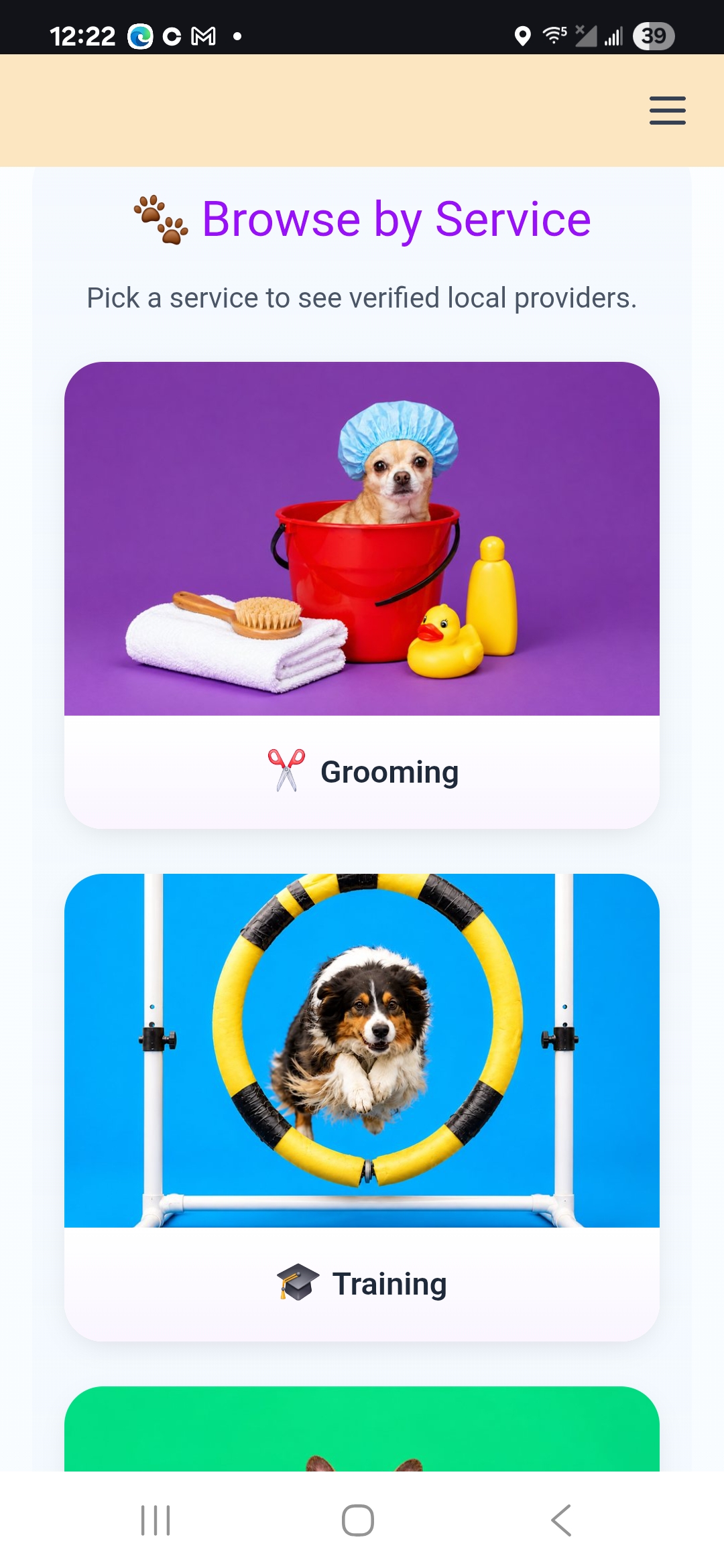
Start with the need
Clear service categories reduce the amount of searching required.
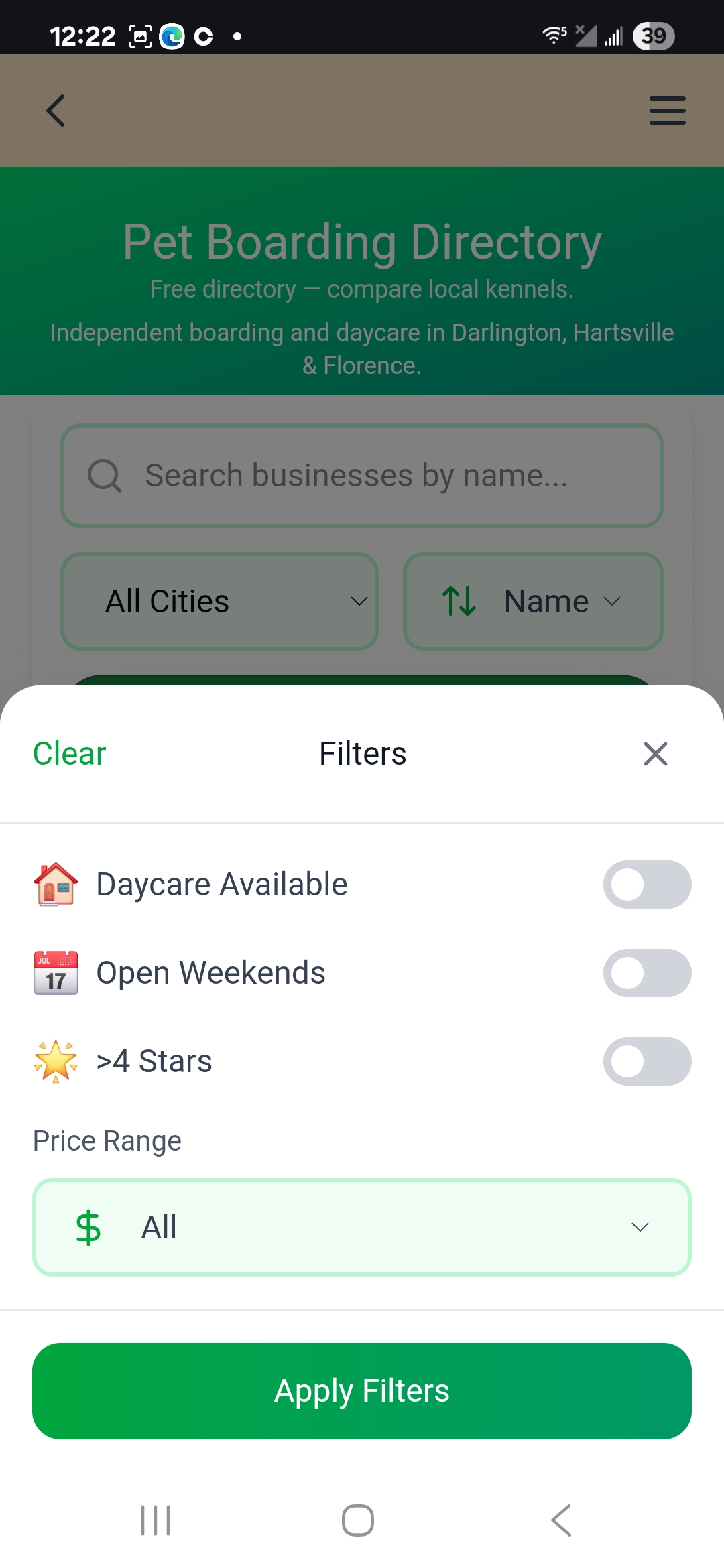
Scan local options
Provider information is structured for quick mobile scanning.
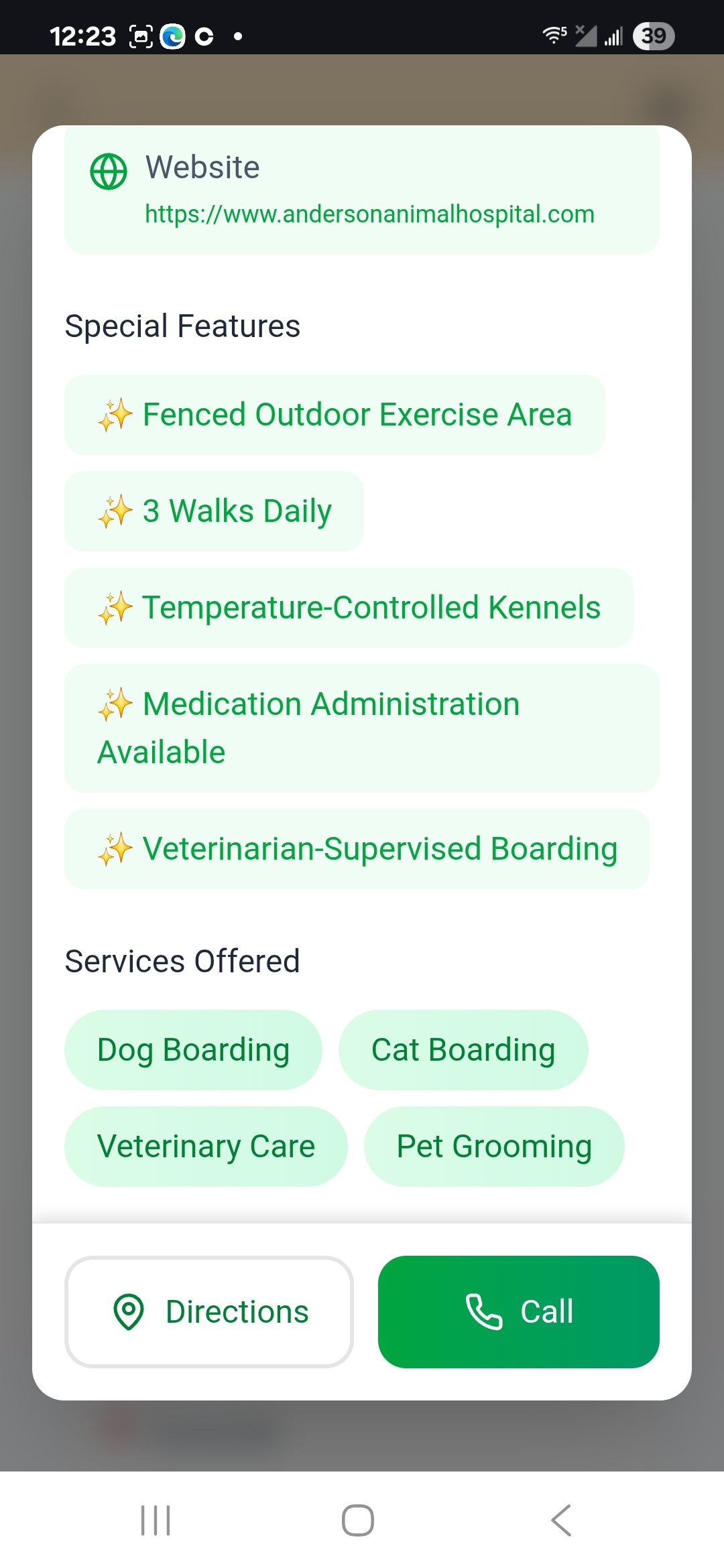
Get the important details
Users can evaluate a provider before leaving the directory.
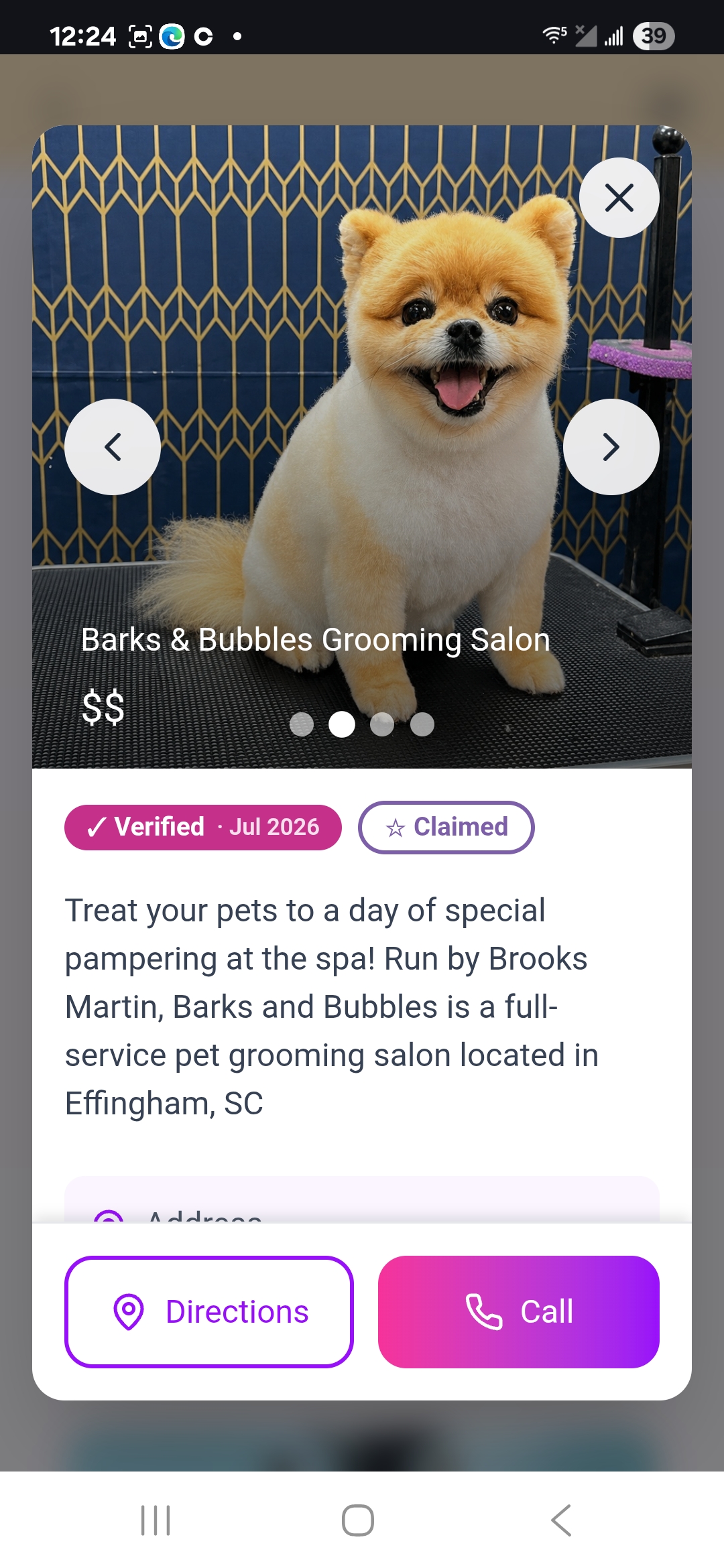
Continue when needed
External sources remain accessible without dominating the experience.
User Testing
Testing changed the product in ways I didn't expect.
Initial testing showed that people could use the directory, but several pieces of feedback pointed to a deeper issue.
Users weren't only asking: "Can I find what I need?"
They were also asking: "Do I trust what I'm seeing?"
Key Insight
Trust was being shaped by small credibility signals throughout the experience.
Change 01
From polished to authentic
Before
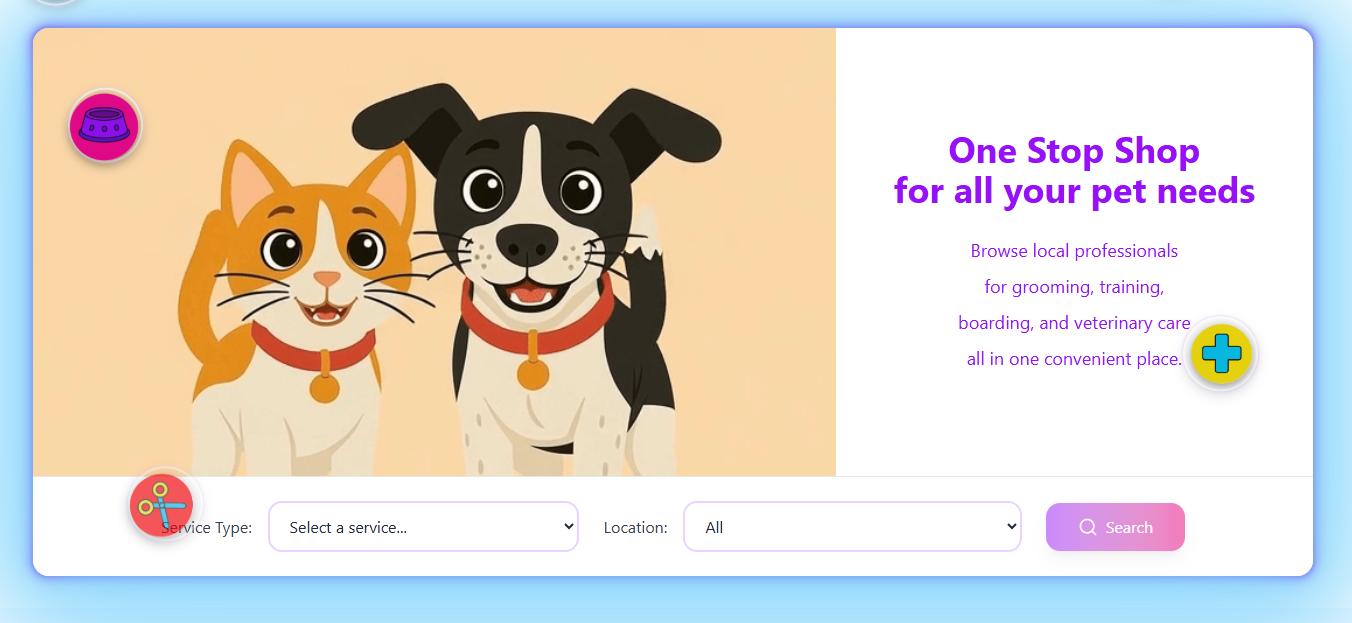
Several users said they did not like the AI-generated animation. It made a local community resource feel less authentic.
After
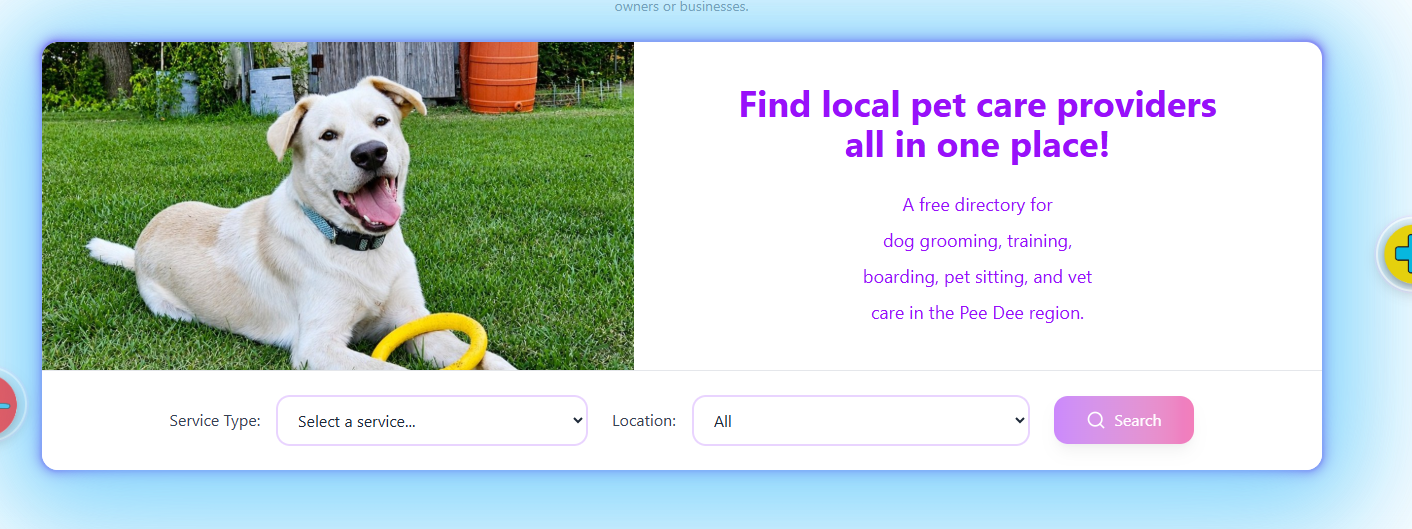
I replaced it with a real photograph of my own dog taken in my backyard.
For a local product, authenticity was more valuable than artificial polish.
Change 02
Making the person behind the product visible
Users had little context about who created the directory or why it existed. I added an About page introducing myself and explaining the personal experience that motivated me to create Pee Dee Pet Care.
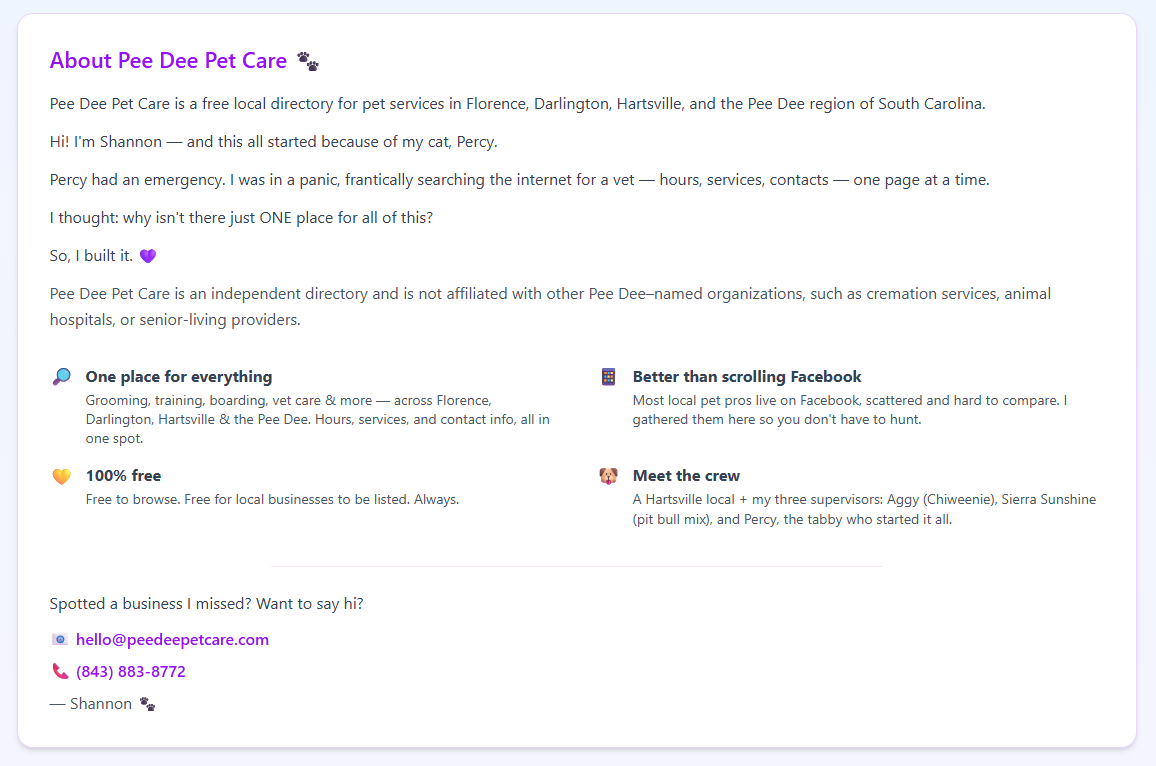
Trust wasn't only about the interface. It was also about understanding who was behind it.
Change 03
More information didn't automatically create more trust
The directory included selected review quotes sourced from Google. Users questioned reviews that had not been submitted organically through Pee Dee Pet Care — the source created uncertainty, not confidence.
Design decision: Remove the pre-filled review quotes.
I chose to remove a completed feature because testing showed that it added information while reducing trust.
Change 04
Useful information shouldn't dominate the hierarchy
Many small local pet businesses rely on Facebook as an important part of their online presence, so Facebook links were included prominently. One tester disliked seeing obvious Facebook links throughout the listings — the links were useful but visually overrepresented an external platform.
Design Decision
Facebook links were moved out of the primary action hierarchy and repositioned as a secondary option within each listing. The information remained available — it was simply given a visual weight that matched its role, rather than competing with the provider's name, phone number, and address.
The solution wasn't to remove useful functionality — it was to change its hierarchy.
Synthesis
One UX insight connected four different design decisions.
Result
69
local providers listed
From UX concept to a product people actually use.
Pee Dee Pet Care moved beyond a portfolio exercise and became a shipped product serving real users. The project required me to work across research, content structure, responsive design, product decisions, testing, iteration, and ongoing operation.
Shipped
Live public product · peedeepetcare.com
Scale
3+ towns · listings labeled with verification status and date last updated
Iterated
Design changes driven by direct user feedback
Reflection
What this project changed about the way I design
01
Listen for the problem behind the feedback
Users may say they dislike a particular image or feature. The designer's job is to understand the underlying reason.
02
Trust is an interaction design problem
Credibility can be influenced by imagery, content sources, hierarchy, language, and transparency — not just navigation.
03
Removing something can be a design improvement
A feature does not earn its place simply because it has already been built.
The strongest iteration wasn't adding more to the product. It was identifying what was getting between users and trust — and removing it.
Pee Dee Pet Care
Role
UX / Product Design
Responsibilities
Research · Information Architecture · Responsive UX · Content Design · User Testing · Iteration · Product Ownership
Status
Shipped / Live
Impact
A free public directory for Pee Dee pet owners